-
-
CALL US NOW
+91 78600 24700

For hotels and hospitals, having access to clean, safe water is essential. Water contamination can result in decreased consumer satisfaction, equipment damage, and health hazards. For this reason, it is crucial to invest in a dependable RO plant for hotels and hospitals. By efficiently eliminating contaminants, dangerous compounds, and microbes, reverse osmosis (RO) systems guarantee high-quality water for drinking, cooking, and other operational requirements.
This article explores what an RO plant offers, why it is crucial for hotels and hospitals, key factors to consider while selecting one, and common questions about RO systems.
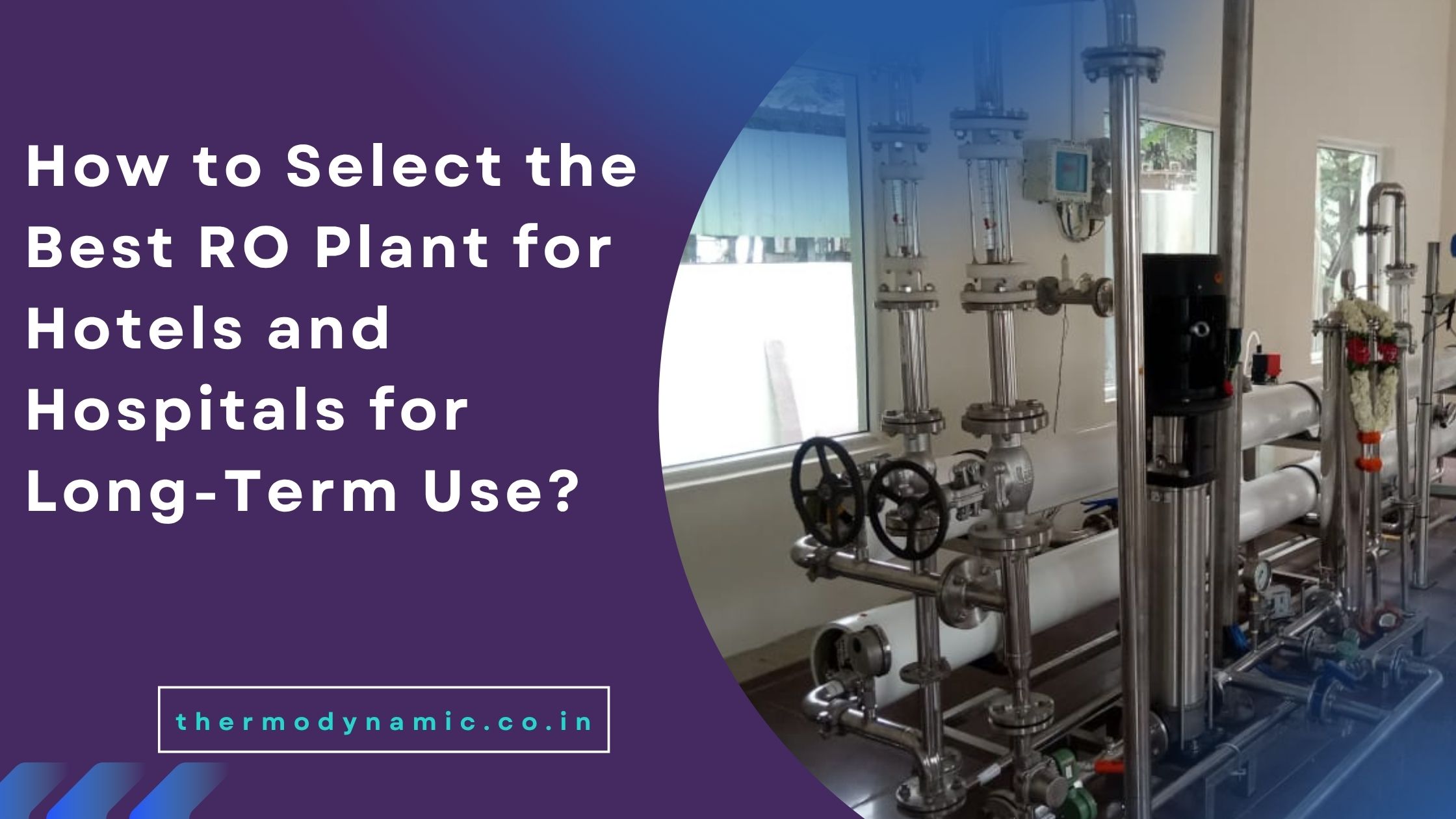
An RO plant for hotels and hospitals is a type of water purification system that removes pollutants like bacteria, viruses, and dissolved salts to provide clean, drinkable water. In contrast to conventional water filters, RO systems employ a semi-permeable membrane to guarantee complete purification and provide water that satisfies safety and health regulations.
Commercial RO plants, like those found in hotels and hospitals, are designed to accommodate larger volumes and meet the daily water needs of many visitors or patients. The RO membrane and post-treatment steps, like UV sterilization, are frequently included in these plants, after pre-treatment steps like sediment filters and activated carbon filters.
In hotels and hospitals, water safety is vital. Health problems might result from drinking contaminated water, particularly for patients with weakened immune systems or visitors with high expectations. By lowering the danger of waterborne illnesses, a RO plant for hotels and hospitals ensures clean drinking water.
Water is necessary for sanitation, laundry, and cleaning in hotels and hospitals. Hygienic operations are ensured by high-quality water, which keeps scale from accumulating in boilers, washing machines, and kitchenware.
Clean water is essential to the visitor experience at hotels. It aids in the treatment and recuperation of patients in hospitals. Using a RO plant to provide clean, filtered water increases customer satisfaction and trust.
RO plants eliminate pollutants and dissolved salts that can damage boilers, pipes, and other machinery. This lowers maintenance costs and extends the life of infrastructure.
Hotels and hospitals are required to adhere to stringent water quality regulations. A well-maintained RO plant for hotels and hospitals guarantees adherence to regional drinking water standards and health laws.
Choosing the right RO plant for long-term use requires careful evaluation of several factors:
Find out how much water your facility uses each day. While hotel usage varies according to occupancy, hospitals may require thousands of liters each day. Continuous supply is ensured by choosing the appropriate capacity.
Check for chemical content, hardness, microbial contamination, and total dissolved solids (TDS) in your entering water. The kind of pre-treatment needed depends on the quality of the source water.
Look for advanced RO membranes and multi-stage purification systems. High-rejection membranes remove maximum contaminants while maintaining energy efficiency.
Choose RO plants that require little upkeep and dependable post-purchase assistance. Hotels and hospitals cannot afford to be closed because of water system malfunctions.
Energy-efficient pumps and membranes in contemporary RO plants save operational costs over time, increasing their sustainability.
Select solutions that are expandable in the future. The RO plant should be able to handle the increased water demand when hotels or hospitals expand their services.
Verify that the facility meets BIS, NSF, or other accepted guidelines for the treatment of potable water.
A reputable supplier of RO plant for hotels and hospitals, Thermodynamic Services offers dependable and effective water filtration solutions. Their knowledgeable staff makes sure that every RO plant for hotels and hospitals satisfies the strictest requirements for performance, safety, and cleanliness. Thermodynamic Services has years of experience constructing and maintaining RO plant for hotels and hospitals, offering outstanding service and long-term support. Companies may trust them to provide them with superior water solutions that are customized to meet their unique requirements.
Ensure safe and pure water for your facility—contact Thermodynamic Services for a reliable RO Plant for Hotels and Hospitals today!
For hotels and hospitals, expert RO plant providers provide a variety of services, such as:
Q1: How often should the RO membranes be replaced?
A: Typically, RO membranes last 2–3 years, depending on water quality and usage. Regular maintenance ensures longevity.
Q2: Can an RO plant remove bacteria and viruses completely?
A: Yes. Combined with UV or chemical sterilization post-treatment, an RO system effectively removes microbial contaminants.
Q3: What is the ideal TDS level for drinking water in hotels and hospitals?
A: Safe drinking water usually has a TDS level below 500 mg/L. RO systems can adjust TDS according to health standards.
Q4: How much space is required for a commercial RO plant?
A: Space requirements depend on capacity. Small plants may need a few square meters, while high-capacity systems require larger areas for tanks and piping.
Q5: Is water from an RO plant safe for cooking and beverage preparation?
A: Absolutely. RO water is free from harmful contaminants and suitable for cooking, beverages, and patient care.
A wise investment that guarantees clean water, effective operations, and long-term cost savings is choosing the best RO plant for hotels and hospitals. Facilities can select a system that suits their unique requirements by assessing capacity, technology, maintenance needs, and water quality.
In addition to safeguarding patients' and visitors' health, a dependable RO plant also improves customer satisfaction, encourages regulatory compliance, and preserves vital infrastructure. Purchasing a top-notch RO system now ensures that you will always have access to safe, clean water for many years to come.
Read More: How to Select the Best RO Plant for Hotels and Hospitals for Long-Term Use?
