-
-
CALL US NOW
+91 78600 24700

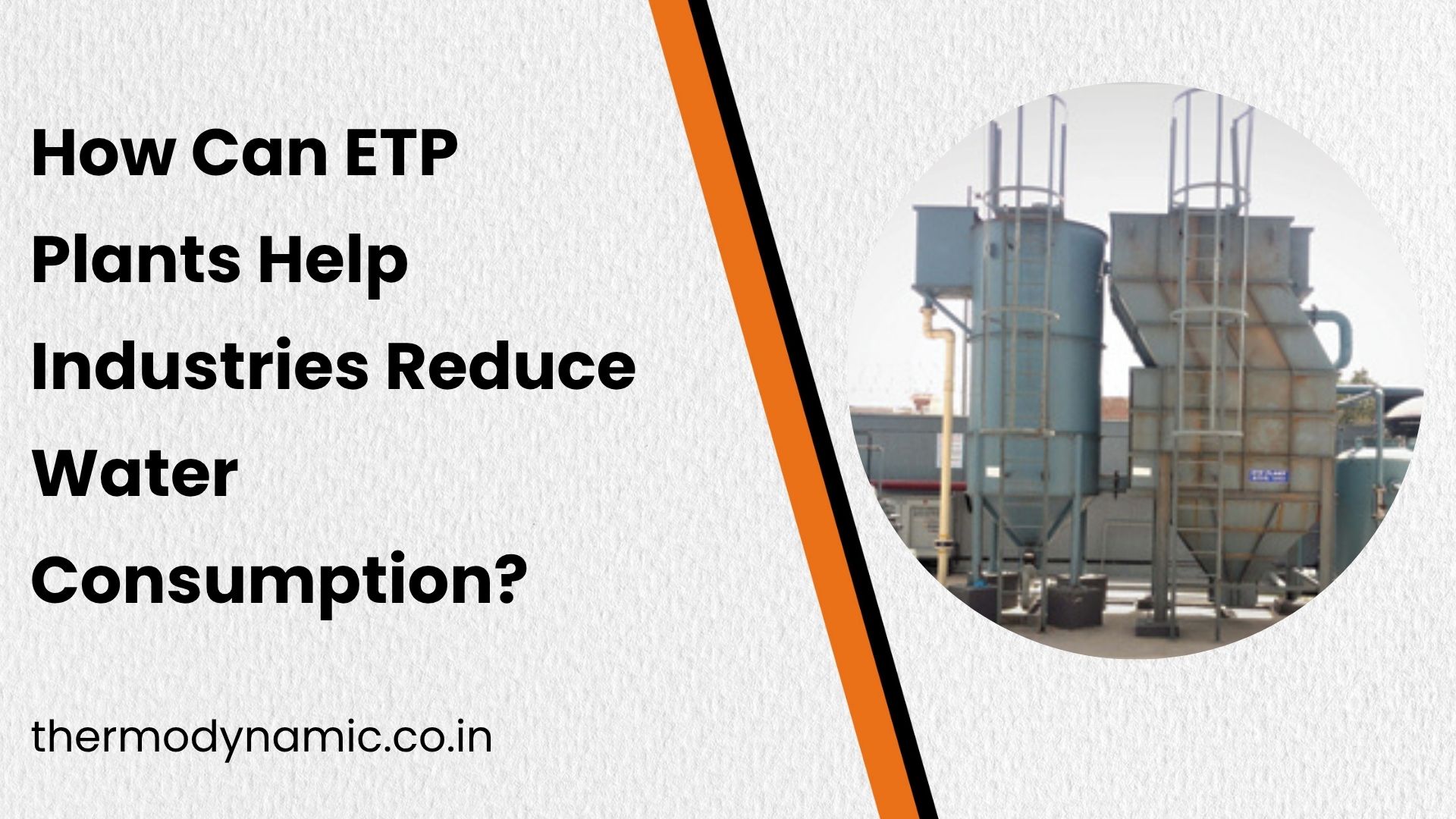
Water is an essential resource for almost every industrial operation, from manufacturing and processing to cleaning, cooling, and utility applications. As freshwater availability becomes more challenging and environmental regulations become increasingly important, industries are looking for practical ways to reduce water consumption while maintaining operational efficiency. An Effluent Treatment Plant (ETP) provides an effective solution by treating industrial wastewater and making it suitable for reuse or safe discharge.
For industries searching for an ETP plant for industrial use in Kanpur, selecting a properly designed treatment system can support water conservation, pollution control, and long-term operational sustainability. Modern ETP solutions can combine physical, chemical, and biological treatment processes to address wastewater characteristics specific to each industry.
An effluent treatment plant is an engineered wastewater treatment system designed to remove pollutants, suspended solids, organic matter, chemicals, oils, and other contaminants from industrial effluent.
Unlike a conventional wastewater disposal approach, an ETP focuses on treating wastewater before discharge and, where technically feasible, recovering treated water for suitable non-potable applications.
A typical industrial ETP may include:
The exact configuration depends on the industry's wastewater quality, flow rate, treatment objectives, and intended reuse application.
Industrial wastewater varies considerably between sectors. A properly engineered ETP is therefore designed according to parameters such as flow, pH, COD, BOD, TSS, oil and grease, dissolved solids, and specific chemicals.
Modern systems can integrate multiple treatment stages to remove different categories of contaminants progressively. This improves treatment reliability and can make treated water suitable for selected reuse applications.
Automation can help plant operators monitor important operating parameters and control pumps, dosing systems, aeration, and other equipment. Digital monitoring is becoming increasingly important for efficient industrial water management.
Treatment generates sludge that requires appropriate handling, dewatering, storage, and disposal or further processing. Effective sludge management is an important part of overall ETP performance.
The biggest opportunity comes from water recycling and reuse. Instead of treating wastewater solely for discharge, industries can evaluate whether treated effluent can be reused for appropriate applications such as cooling-tower makeup, gardening, floor washing, flushing, or other non-potable processes.
For example, an industrial facility may send wastewater to an ETP, treat it through primary and secondary processes, and then use additional filtration or membrane treatment where necessary. The recovered water can then be redirected to an approved application.
This creates a more circular water-use model:
Freshwater → Industrial Process → Wastewater → ETP → Treatment → Recovered Water → Reuse
The result can be lower freshwater demand, reduced wastewater discharge, and better utilization of available water resources.
Reusing suitably treated wastewater can reduce dependence on freshwater sources. This is particularly valuable for water-intensive industrial facilities.
ETPs help industries control pollutants before wastewater is discharged. This supports responsible industrial operations and helps protect surrounding water resources.
Industrial effluent discharge is subject to applicable environmental requirements. Treatment systems help industries manage wastewater in accordance with prescribed standards and consent conditions. CPCB identifies industrial pollution control and monitoring as important components of environmental management.
When treated water is reused internally, the volume requiring final discharge may decrease, depending on the treatment configuration and permitted reuse practices.
Water recycling contributes to resource efficiency and can support broader ESG and sustainability objectives.
An ETP plant for industrial use in Kanpur can be considered across several sectors, depending on wastewater characteristics and regulatory requirements.
Common applications include:
Kanpur has a significant industrial wastewater-management context, particularly around the tannery sector. The Ministry of Jal Shakti's 2024–25 annual report notes that three CETPs in the Kanpur region's tannery sector were being monitored, including the Jajmau tannery cluster.
Water availability, environmental responsibility, and operational costs are increasingly connected. Industries cannot look at wastewater merely as a disposal problem; it can also represent an opportunity for resource recovery.
The Ministry of Jal Shakti has highlighted wastewater reuse and recycling for industries and encouraged technological advancement, reuse/recycling, and zero liquid discharge where feasible.
For industrial buyers, this means an ETP should be evaluated not only according to its treatment capacity but also according to its potential contribution to water efficiency and reuse.
Conduct a detailed wastewater analysis before selecting the treatment process. Parameters such as BOD, COD, TSS, pH, TDS, oil and grease, and industry-specific contaminants are important.
Determine average, peak, and future wastewater generation. Selecting capacity only for current requirements may create limitations when production expands.
Define whether the objective is compliant discharge, partial reuse, extensive recycling, or a higher-recovery system.
The plant layout should consider tanks, equipment, pipelines, sludge handling, electrical systems, and access for maintenance.
Energy consumption, chemical requirements, spare parts, skilled operators, sludge generation, and routine maintenance should be evaluated before procurement.
Facilities with demanding operations may benefit from automated controls, online monitoring, alarms, and data logging.
Do not compare ETP systems only on initial purchase price. Capital cost, energy consumption, chemicals, maintenance, replacement parts, sludge management, and expected operating life all influence the overall cost.
Industrial wastewater treatment is moving toward water recycling, digital monitoring, advanced treatment, and circular water management.
Recent industry discussions in India have emphasized water audits, real-time water-use data, advanced recycling, Zero Liquid Discharge technologies, and data-driven water-efficiency decisions.
The 2026 National Water Data Policy draft also identifies water stress, pollution, groundwater depletion, and the need for better water data as important challenges.
Consequently, newer ETP projects are increasingly being evaluated as part of an integrated water-management strategy rather than as standalone pollution-control equipment.
For businesses evaluating an ETP plant for industrial use in Kanpur, Thermodynamic Services can be considered for a solution-oriented approach to industrial wastewater treatment. The right ETP requires more than equipment selection; it requires understanding wastewater characteristics, production processes, treatment objectives, operational conditions, and future water-reuse requirements.
A technically appropriate approach can help industries select a treatment configuration that balances treatment performance, water recovery, operational requirements, and long-term value without relying on unnecessary system complexity.
An ETP plant can play an important role in helping industries reduce water consumption by treating wastewater and enabling its reuse for suitable applications. From environmental compliance and pollution control to water conservation and sustainability, a well-designed system can provide benefits across multiple areas of industrial operations.
For companies looking for an ETP plant for industrial use in Kanpur, the priority should be selecting a system based on actual wastewater characteristics, required treatment quality, capacity, reuse objectives, operating costs, and applicable environmental requirements.
An ETP is used to treat industrial wastewater by removing pollutants and contaminants before permitted discharge or suitable reuse.
Yes. Depending on the treatment quality and intended application, treated wastewater can potentially be reused for suitable non-potable industrial purposes.
Industries generating wastewater containing pollutants or contaminants may require effluent treatment. Common sectors include textile, tannery, pharmaceutical, chemical, food processing, paper, engineering, and metal-processing industries.
Capacity is generally determined from wastewater generation data, including average and peak flow, production levels, process characteristics, and expected future expansion.
Key considerations include wastewater analysis, treatment technology, plant capacity, discharge or reuse requirements, available space, automation, energy consumption, sludge management, maintenance, and total cost of ownership.
If your business is planning wastewater treatment or water-reuse infrastructure, Thermodynamic Services can help you evaluate the requirements for an ETP plant for industrial use in Kanpur. Discuss your wastewater characteristics, treatment capacity, and reuse objectives with a technical team to identify a suitable industrial ETP solution.
Read More: How Can ETP Plants Help Industries Reduce Water Consumption?
